The new European research and innovation project ResPECT, aims to develop a trustworthy, multilingual and GDPR-compliant AI Assistant: to improve patient care.
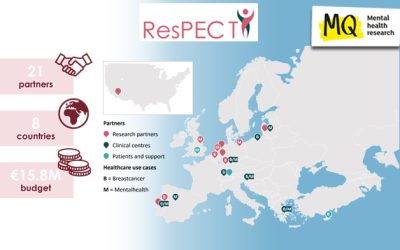
Developing a new European AI assistant to improve patient care
read more


There are several types of anxiety disorders, characterized not only by distressing, persistent anxiety but often by the dysfunctional behaviors that reduce that anxiety. Examples of the different anxiety disorders are:
Having regular or uncontrollable worries about many different things in your everyday life. Typically, these symptoms would be present for at least six months
Manifests as an overwhelming fear or anxiety in response to social situations, encompassing interactions in various settings such as workplaces, social gatherings, and parties.
Can involve experiencing recurring episodes of intense fear or discomfort, commonly known as panic attacks, which occur unexpectedly and without an identifiable trigger.
An intense and irrational fear or anxiety response that arises when encountering a specific situation or object, often leading to avoidance behaviors.
It’s important to know that feeling anxious is not the same as having a diagnosable anxiety disorder, however disproportionate and uncontrollable feelings of anxiety are a symptom of a disorder.
There are very many types of anxiety disorders that might be related. For example, panic disorder is a particular style of anxiety disorder where a person has frequent panic attacks. However experiencing panic attacks is also a symptom of Generalised Anxiety Disorder (GAD).
If left unmanaged, chronic anxiety could turn into a mental illness like an anxiety disorder. If left untreated, anxiety disorder can seriously affect your health, outlook and life. So, what does having anxiety disorder or having panic attacks feel like? What effect can it have if untreated? And what can research do to help?
Anxiety feels different for everyone. Some might experience physical effects on their body whilst others might experience anxiety which affects their minds.
The brain and body and closely interrelated such that feelings of fear and anxiety trigger the hypothalamus in the brain to stimulate the release of hormones in our bodies which, in turn produces the ‘fight-or-flight’ response, the physical symptoms.
Though this is not an exhaustive list, these are common symptoms/experiences you may have:
"Anxiety can feel like a spotlight in your mind shining on your deepest fears or worries at all times."
Anxiety feels different for everyone. Some might experience physical effects on their body whilst others might experience anxiety which affects their minds.
“My anxiety/panic attacks started when I was aged 25. I am now in my 70s. My life was turned upside down due to them. I became seriously depressed and constantly in fear. I was unable to go on a train or any kind of public transport for fear of an attack and I stopped socialising with friends.” Chrissie, MQ panic disorder study participant
“My anxiety and claustrophobia, known as agoraphobia, was out of control. {As a result} I wasn’t working [and] had withdrawn socially.” Clare Downing, MQ panic disorder study participant
“My panic attacks started around the age of 14. Even the slightest bit of tension triggered me. I would scream and cry uncontrollably if my parents tried to comfort me. And by 15, I was sleeping with loud music every night. That was the only way I knew how to fall asleep. I was terrified of the silence. I attached a security alarm next to my bed, just in case.” Deepanshi Gulati, MQ Ambassador
“In the midst of an attack it can feel as though my life is in danger, I can’t breathe, my vision goes blurry. The fear of experiencing a panic attack at certain points in my life became so strong I developed a fear of leaving my house, which then exacerbated my clinical depression and physical health hugely. It can feel overwhelming to even begin to approach alone.” Juliette Burton, MQ writer
Anxiety and its related conditions can be hugely life-limiting. You can read more detail about what it feels like to experience an anxiety attack here:
By funding research we can transform what it means to experience anxiety, advancing treatments and improving the lives of millions of people.
Your donation spent on research projects at some of the world's top institutions. You will be supporting studies in psychology, neuroscience, data science, sociology, psychiatry and more.
With your help, we can find solutions for people living with depression, PTSD, anxiety, eating disorders and psychosis both now and in the future.
Because many factors can increase the chance of developing an anxiety disorder, everyone’s experience of anxiety will be different. It is thought that there is no single cause, but several factors interact to increase your chance of developing an anxiety disorder:
Genetically inherited:
Research shows that having a close relative with anxiety problems might increase your chances of having anxiety problems yourself.
Past or childhood experiences:
Common triggers for anxiety problems are related to difficult experiences in childhood as experiencing extreme stress and trauma can have a big impact. Experiences such as:
Current Life Situation:
Drugs and Medication:
Anxiety can, in some cases, be a side effect of certain medications. Recreational drugs and alcohol can also increase anxiety.
Anxiety disorders can be treated in a number of ways. Many people have symptoms associated with stressful life events or situations, which can improve without the need for treatment. For those who fulfil an anxiety disorder diagnosis - in terms of severity, duration, distress, and impairment - some form of treatment is likely to be beneficial.
There is strong evidence that psychological and pharmacological treatments are effective for treating many anxiety disorders. Self-help and complementary approaches may help with mild anxiety and can also assist whilst undergoing other forms of therapy. (See also BAP Guidelines).
There are different ways that can help with anxiety such as:
Giving a dedicated time and safe place to worry can provide reassurance. This may involve writing down your worries, meditating and breathing exercises to relieve your worries.
As researchers have shown physical problems can sometimes trigger anxiety. Make sure to look after yourself by considering your sleep, diet and exercise.
For more information on breathing exercises and techniques. (See webmd)
Several studies have shown that yoga may help reduce stress and anxiety as it can enhance your mood and oversee a sense of well-being.
Meditation may help you learn to be more mindful and aware of the present moment without judgement.
These products or services may help improve the health of the body, mind and spirit.
There is some evidence for the potential effectiveness of herbal remedies such as Passiflora species extracts and Kava.
Cognitive Behavioural Therapy (CBT)– Therapy that specialises in your thoughts, feelings and teaches you coping mechanisms to deal with your anxiety.
Good stress relief just may involve having someone listen to you without judgement. Samaritans or Anxiety UK are helplines that can support you when you’re going through anxiety.
Support communities also help and may make you feel less alone. Finding people who experience the same disorder can also help and offer great advice. Support groups such as:
By gaining a better understanding of Anxiety Disorder, recognising more symptoms and signs as well as gaining more access to services and supports. You will gain the right support and help necessary for you.
Treatment will provide you with the right support and help you cope with your anxiety. It is vital to reach out for help if you think you have symptoms of an anxiety disorder.
Support groups help you through your anxiety disorder, they help you feel less alone, you could offer and receive advice from people who are experiencing the same disorder.
MQ funds a number of different studies that cover anxiety disorders. Here are some of the recent findings:
Dr Colette Hirsch and her team developed a treatment called Cognitive Bias Modification for interpretation. In ten 25-minute sessions, participants with anxiety were presented with situations that could be interpreted negatively or positively. They were given repeated training to interpret situations more positively, helping to overcome the negative thinking habits of RNT.
Dr Katherine Young investigates and monitors how symptoms of anxiety and depression change in young people over a period of 2 years and examines whether these changes can be used to predict those who will go on to experience long-term issues.
Dr Bronwyn Graham investigates the relationship between hormones and anxiety and to find out if natural variations in hormones such as oestrogen make anxiety more likely.
So how has MQ approached research of anxiety? We have supported researchers looking at various aspects of anxiety both in adults and children and young people, with huge breakthroughs being made in multiple aspects of the condition including treatment, prevention and intervention.
One example is a study that marks its 10th year since it began, conducted by one of MQ’s first fellows, Dr Andrea Reinecke. The study investigated one aspect of anxiety; panic disorder, something Dr Andrea feels passionately had previously been underfunded.
“Research projects like mine are only possible with funding and sadly there just isn’t enough of it. Because of this, our understanding of how anxiety develops and how it can be prevented is nowhere near where it needs to be.” - Dr Andrea Reinecke, MQ Fellow 2014
Thanks to MQ’s support, Andrea was able to show that panic disorder can be treated effectively with only one session of treatment. These impressive findings have enormous implications for reducing waiting lists and improving treatment delivery in routine clinical care.
Chrissie and Clare, quoted earlier in this article, were two participants in Dr Andrea’s study. Chrissie’s anxiety disorder and panic attacks had inhibited her life for around 50 years. But after seeing an advert for one of MQ’s funded studies, she decided to take action. Clare too experienced intense anxiety and other related conditions that limited her life-enjoyment hugely:
“Dr Reinecke was the first health professional who didn’t tell me to “go to my happy place” but really listened to how I felt when I was having an attack.”
For both Chrissie and Clare, the results of Dr Andrea’s treatment were life-changing:
“I can honestly say my life has been completely turned around. Since the treatment I have been able to do so much more without the constant fear. Travel, theatres, cinemas, holidays and even a gliding experience for my 70th birthday!” Chrissie, MQ study participant
“After participating in the study, life opened up. I began re-engaging friends and working, things that had become impossible and were previously unimaginable. {Participating in this MQ funded study} gave me the tools to control my anxiety, not be controlled by it, giving me my life back. She has done the same for hundreds of others as well.” Clare, MQ study participant
The overwhelming positive effect this study has had on these two individuals holds huge promise for so many others whose lives are massively affected by anxiety and panic disorder. As Chrissie attests, participating in the research can help someone live a fuller, more richer life:
“I cannot express just how grateful I am to Andrea and her work. She has given me an escape from a terrible illness that I never believed was possible. With my whole heart and endless thanks, I hope and trust she can continue to help others as she has me.”
If you’d like to participate in future studies into anxiety, panic disorder or other mental health conditions, take a look at MQ’s Participate page where you can discover studies recruiting for participants now. You might have life-enhancing experiences, like Chrissie and Clare. You will definitely help researchers discover answers to guide us all towards a mentally healthier future.
Dr Andrea’s research, along with the many studies MQ has supported in the last decade, has changed lives for the better, and says it’s all thanks to MQ:
“The work of MQ Mental Health Research is so incredibly important to help us further our understanding of anxiety disorders and other mental health conditions, so that we can develop more effective interventions.”
Do you need help with anxiety disorder or panic attacks? Help is available. Get help now.
Want to see more of our mental health research? See how our world-class researchers are working tirelessly to better understand, diagnose and treat mental illness.
Anxiety can be caused by a mix of stress, genetic factors, brain chemistry, traumatic experiences, and environmental influences.
Symptoms of an anxiety attack include rapid heartbeat, sweating, trembling, shortness of breath, chest pain, nausea, dizziness, and a sense of impending doom
Anxiety often feels like excessive worry, nervousness, restlessness, and physical symptoms such as a racing heart, sweating, trembling, and gastrointestinal issues
Yes, anxiety can cause chest pain, often due to muscle tension, hyperventilation, or the body's stress response
Effective ways to manage anxiety include deep breathing exercises, mindfulness, regular physical activity, maintaining a healthy routine, and seeking professional help if needed.
Anxiety may go away on its own if it is situational. However, chronic anxiety disorders typically require treatment to manage symptoms effectively.
Anxiety can worsen at night due to fewer distractions, increased fatigue, and the mind's tendency to focus on worries when trying to relax
Severe anxiety is characterized by persistent, excessive worry that interferes with daily life, physical symptoms like heart palpitations, and avoidance behaviors
The new European research and innovation project ResPECT, aims to develop a trustworthy, multilingual and GDPR-compliant AI Assistant: to improve patient care.
People living with severe mental illness already face significant inequalities in physical health. New research is helping us better understand one important part of this picture: why infections lead to hospital admissions more often in this group, and why outcomes can be worse.
People living with severe mental illness already face huge health inequalities. Now, new research led by MQ researcher Dr Amy Ronaldson shows that this group is also significantly more likely to die from common infections.

ANXIETY DISORDER, DEPRESSION
People with Type 1 diabetes are at a higher risk of developing depression, anxiety, and early mortality. Can an existing care model be adapted to help?

ANXIETY DISORDER, DEPRESSION
Dr Katherine Young investigates and monitors how symptoms of anxiety and depression change in young people over a period of 2 years and examines whether these changes can be used to predict those who will go on to experience long-term issues.

ANXIETY DISORDER, DEPRESSION, SUICIDE
The DATAMIND platform is a UK-wide mental health data research hub that will transform mental health research.
STAY UPDATED 📢